10. Text reading
10.1. Introduction to text reading
This section provides a synchronic and diachronic analysis of Matthew 5.11–14 from the New Testament as found in Codex Zographensis. The manuscript is now located in the Russian National Library (Saint Petersburg). It was written around 1000 AD in the Glagolitic script.
The Glagolitic text of Codex Zographensis with a Cyrillic transliteration can be found at the site of the University of Sofia; it can also be found at Wikisource (Glagolitic original and Cyrillic transliteration).
The Codex Zographensis is phonologically rather conservative compared to other manuscripts, but with regard to morphology and lexicon it is more innovative. The reduced vowels ĭ ŭ are mostly preserved, although they sometimes have disappeared in weak position and turned into e o in strong position (see 3.4.12). Palatal [rʲ ʎ ɲ] are (inconsistently) written with the “kamora” diacritic: р҄ л҄ н҄, as they are in Codex Suprasliensis.
Abbreviations in the text (e.g. ⱍⰽ҃ⱏⰻ / чк҃ꙑ) have been resolved in the Cyrillic transliteration (чловѣкꙑ).
Abbreviations:
- Glag.: Glagolitic original, punctuation retained
- Cyr.: Cyrillic transliteration, “modern” punctuation
- translit.: Roman transliteration, “modern” punctuation
- morph.: Morphological analysis
- lexeme: dictionary headword
- CS: Common Slavic reconstruction/transponat
- PS: Proto-Slavic reconstruction/transponat
- PBS: Proto-Balto-Slavic reconstruction/transponat
- PIE: Proto-Indo-European reconstruction/transponat
- Gk.: Greek original
- Eng.: English translation
10.2. OCS text reading 1: Matthew 5.11
10.2.1. Text reading 1: text
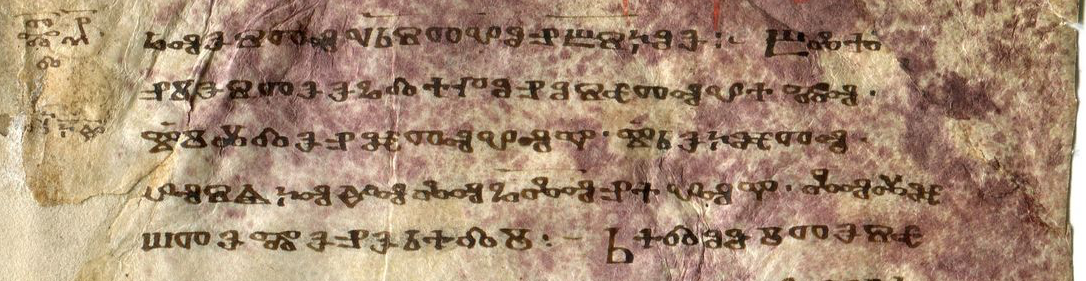
| Glag. | Ⰱⰾⰰ[ⰶⰵ]ⱀⰻ | ⰵⱄⱅⰵ | ⰵⰳⰴⰰ | ⱂⱁⱀⱁⱄⱔⱅⱏ | ⰲⰰⰿⱏ · |
|---|---|---|---|---|---|
| Cyr. | Бла[же]ни | есте | егда | поносѧтъ | вамъ |
| translit. | Blaž‑en‑i | jes‑te | jegda | ponos‑ętŭ | va‑mŭ |
| morph. | bless‑pst.pass.ptcp‑nom.pl.m | be-prs.2pl | when | reproach-prs.3pl | you-dat |
| lexeme | blažiti ipfv | byti | po-nositi ipfv | vy | |
| CS | bȏlženi | jestè | jegdà | po-nòsętь | va̋mъ |
| PS | ˌbalg̯enəi̯ | esˈte | i̯agdā | pa-naˈsei̯enti | ˈu̯āmə |
| PBS | ˌbalg‑ei̯enai̯+s | ˈeste | i̯a-dā | pa-naˈsei̯anti | u̯ō̰mas |
| PIE | b/bʰol(h)g/gʷ/gʰ/gʷʰ‑ei̯e-en-ói̯+s | h₁és-th₁e | i̯o-d-? | po h₁nok̑-éi̯-o-nti | u̯ō‑bʰi̯os |
| Gk. | μακάριοί ἐστε ὅταν ὀνειδίσωσιν ὑμᾶς | ||||
| Eng. | Blessed are ye when men shall reproach you, | ||||
| Glag. | ⰺ҅ | ⰻⰶⰴⰵⱀⱘⱅⱏ | ⰲⱏⰹ · | ⰺ҅ | ⱃⰵⰽⱘⱅⱏ · |
|---|---|---|---|---|---|
| Cyr. | і | ижденѫтъ | вꙑ | і | рекѫтъ |
| translit. | i | ižden-ǫtŭ | vy | i | rek‑ǫtŭ |
| morph. | and | persecute-prs.3pl | you:acc | and | speak-prs.3pl |
| lexeme | iz-gŭnati pfv | vy | rešti pfv | ||
| CS | ì | jĭz-žènǫtĭ||ŭ | vy | ì | rekǫ́tĭ |
| PS | ˈei̯ | iz-geˈnanti | u̯ə̄ | ˈei̯ | rekanˈti |
| PBS | ˈei̯ | iź-ˈgenanti | u̯ōs | ˈei̯ | reˈkanti |
| PIE | h₁éi̯ | h₁eg̑ gʷʰén-onti | u̯ōs | h₁éi̯ | rek-ónti |
| Gk. | καὶ διώξωσιν καὶ εἴπωσιν | ||||
| Eng. | and persecute you, and say | ||||
| Glag. | ⰲⱐⱄⱑⰽⱏ | ⰸⱏⰾⱏ | ⰳ҃ⰾⱏ | ⱀⰰ | ⰲⱏⰹ · |
|---|---|---|---|---|---|
| Cyr. | вьсѣкъ | зълъ | г[лаго]лъ | на | вꙑ |
| translit. | vĭsěk‑ŭ | zŭl‑ŭ | g[lago]l‑ŭ | na | vy |
| morph. | every-acc.sg.m | evil-acc.sg.m | word‑acc.sg | to | you:acc |
| lexeme | vĭsjakŭ | zŭlŭ | glagolŭ m | vy | |
| CS | vĭśa̋kŭ | zŭ̀̀lŭ | golgòlŭ | nȃ | vy |
| PS | u̯iˈxāku | zuˈlu | galˈgalu | nā | u̯ə̄ |
| PBS | u̯iˈšā̰kam | ˈźulam | galgal‑am | nō | u̯ōs |
| PIE | u̯is-ah₂k‑om | g̑/g̑ʰul-om | g/gʷol-g/gʷol‑om | nō | u̯ōs |
| Gk. | πᾶν πονηρὸν καθ’ ὑμῶν | ||||
| Eng. | all manner of evil against you | ||||
| Glag. | ⰾⱏⰶⱘⱎⱅⰵ | ⰿⰵⱀⰵ | ⱃⰰⰴⰻ · |
|---|---|---|---|
| Cyr. | лъжѫште | мене | ради. |
| translit. | lŭž‑ǫšt‑e | mene | radi. |
| morph. | lie‑prs.ptpc.act‑nom.pl.m | I:gen | on account of |
| lexeme | lŭgati ipfv | azъ | |
| CS | lŭžǫtje | mene | ra̋di |
| PS | lugi̯anti̯e | mene | ˈrādī |
| PBS | lugi̯anti̯es | ˌmene | (loan) |
| PIE | lugʰ-i̯ó-nti̯-es | méne | – |
| Gk. | ψευδόμενοι ἕνεκεν ἐμοῦ. | ||
| Eng. | falsely, for my sake. | ||
10.2.2. Text reading 1: commentary
blaženi
- OCS blažiti is derived from blagŭ ‘good’ < CS *bȏlgŭ, cf. substantivised neuter *bȏlgo > Ru. dial. adv. bólogo ‘well, good’, Cz. blaho ‘bliss’, Po. błogo ‘good, happiness’, BCMS blȃgo ‘wealth, money’
- the root *bȏlg- has no clear etymology
jegda
- from relative stem PIE *i̯e/o-; cf. CS *kogda adv. ‘when?’, from PIE *kʷe/o-; and CS *togdà adv. ‘then’, from PIE *te/o-
- the Slavic *g is unexpected; cf. Lith. kadà ‘when; because’, Ved. kadā́ adv. ‘when?’; however, Lith. kadà originally contained a final nasal, as shown by kadángi ‘as, because’, East Lith. dial. kadù, OPr. kadan ‘when’ (Derksen 2002: 11)
- according to Derksen (2008), 227, the suffix is CS *gŭda, which may be from *goda, gen.sg of *gȍdŭ ‘(right) time’
ponosętŭ
- CS *po < PS, PBS *pa is perhaps from PIE *h₂po, ablaut variant of *h₂apo in Ved. ápa adv. ‘away, from’, Gk. ἀπό prep. ‘from’, Lat. ab prep. ‘from’, Goth. af prep. ‘from’
- CS *nosi- < PS *nasei̯- < PIE *h₁nok̑-éi̯e-
- iterative formation (6.8) from CS *nes- ‘carry’ < PS *nes- < PIE *h₁nek̑- -PIE *h₁nek̑- also in Lith. nèšti nešù ‘carry’; OAv. subj. nīš nāšāmā ‘they will carry out’; Gk. ἐνεγκεῖν ‘bring’
vĭsěkŭ
- from CS *vĭśakŭ, from PS *u̯iˈxāku via the Second Palatalisation
iz
- Gk. ἐξ prep., Lat. ex prep.
- *i in Balto-Slavic is unclear
iždenǫtŭ
- OCS žd from *zg by the First Palatalisation (3.4.1) is regular and indicates that PS *g was palatalised to *dž, which then became CS *ž; cf. PS *drazg(i)i̯- (CS *droždž(ĭ)j-) ‘yeast’ > OCS droždię pl.f, Bulg. dróždie, Ru. dróžži n, Ukr. driždži, Po. drożdże pl.f
- CS prs. stem *žene- < PS *gene- with *ž from *g by the First Palatalisation (3.4.1), thematicised from PIE *gʷʰen- ‘slay’
- CS inf. *gŭn-(a̋-) < PS *gun- < PBS *gun- < PIE *gʷʰn̥-, originally the preconsonantal variant, with development of PIE *n̥ to PBS *un (not *in, the normal development) (3.2.6)
- Lith. genù giñti ‘drive, urge’, OPr. guntwei ‘chase, drive’, prs.1pl gunnimai; Skt. hánti ‘strike, slay’; Gk. θείνω ‘kill’
zŭlŭ
- probably related to Lith. (Žem.) atžū́lus (a.p. 1) and atžūlùs (a.p. 3) ‘rude’, although PS *u vs. PBalt. *ṵ̄ requires an explanation
glagolŭ
- reduplicated version of the root *gol-, also in CS *gȏlsŭ ‘voice’
- Lith. galsas ‘echo’ (attestation?); OHG kallōn ‘chatter’; Welsh galw ‘call’
na
- Lith. nuõ ‘from’, Latv. nùo ‘from’, OPr. no, na ‘onto, against’
- further etymology unclear; Vasmer compares Av. ana ‘upwards’, Goth. ana ‘on, at’, Gk. ἀνά prep. ‘on, up along’, ἄνω ‘upwards’
na vy
- in PS and CS the preposition was accented as a consequence of Šaxmatov’s Law (see 3.2.7)
lŭžǫšte
- related to Latv. lùgt (long *ū) ‘request, invite’; Derksen (2015: 295) suspects Lith. lūgóti ‘request, beg’ to be a loan from Latvian
- from (apparent) PIE *lugʰ-, zero grade of *leu̯gʰ-, also in Goth. liugan ‘lie’, ONor. ljúga ‘lie’ etc.; the root is only attested in Balto-Slavic and Germanic
- with regular loss of the weak reduced vowel: Ru. lgátʹ, 1sg lžú etc.; Po. łgać, 1sg łžę etc.
- in the suffix of the present active participle Slavic has generalised PIE *-onti̯-, originating in the feminine (e.g. gen.sg *-ont-i̯ah₂-s), except in nom.sg.m–n PS *u̯edən (CS *vedy) < PIE *-ont-s (see 7.4)
- the Baltic languages have also generalised *-onti̯- (e.g. gen.sg.m sùkančio), except in some forms, e.g. nom.sg.m suką̃s ‘turning’, acc.sg.m sùkantį, nom.sg.n suką̃
- in the i̯e/o-verbs, PS *i̯an should have become CS *ję (3.4.2), but this has been replaced with *jǫ by analogy with the e/o-verbs, e.g. PS *u̯edanti̯e > CS *vedǫtʲe
mene
- the correspondence with OAv. mə̄.nā, YAv. mana points to PIE *méne; cf. Ved. máma, with -m- by assimilation
radi
- probably a borrowing from Iranian; cf. OPers. rādiy ‘for the sake of’
10.3. OCS text reading 2: Matthew 5.12
10.3.1. Text reading 2: text
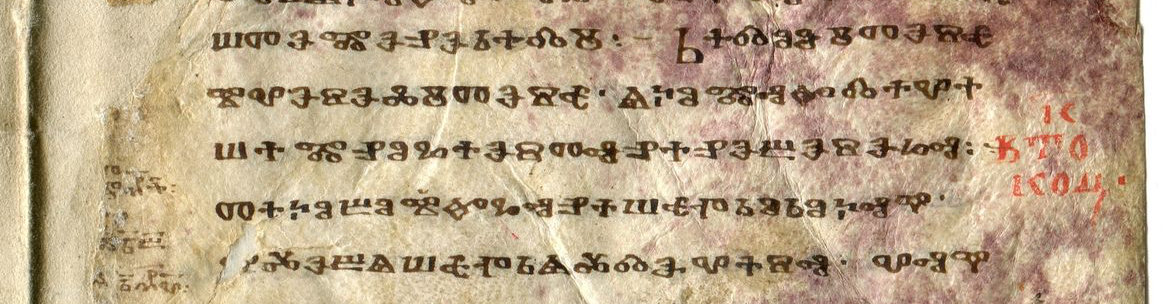
| Glag. | Ⱃⰰⰴⱁⱆⰻⱅⰵ | ⱄⱔ | ⰺ | ⰲⰵⱄⰵⰾⰻⱅⰵ | ⱄⱔ · |
|---|---|---|---|---|---|
| Cyr. | Радѹите | сѧ | і | веселите | сѧ, |
| translit. | Radui‑te=sę | i | veseli‑te=sę | ||
| morph. | rejoice-impv.2pl=refl.acc | and | be:glad-impv.2pl=refl.acc | ||
| lexeme | radovati sę ipfv | veseliti sę ipfv | |||
| CS | ra̋dujite | sę | ì | veseli̋te | sę |
| PS | ˈrādāu̯i̯āi̯te | sēn | ˈei̯ | u̯eseleˈi̯āi̯te | sēn |
| PBS | ˈrā̰da̰u̯i̯a̰i̯te | sēm | ˈei̯ | u̯eseleˈi̯a̰i̯te | sēm |
| PIE | rohd‑?‑o‑i̯h₁‑te | sē+m | h₁éi̯ | h₁u̯es-el-ei̯-o-i̯h₁-te | sē+m |
| Gk. | χαίρετε καὶ ἀγαλλιᾶσθε, | ||||
| Eng. | Rejoice, and be exceeding glad: | ||||
| Glag. | ⱑⰽⱁ | ⰿⱏⰸⰴⰰ | ⰲⰰⱎⰰ | ⰿⱀⱁⰳⰰ | ⰵⱄⱅⱏ | ⱀⰰ | ⱀⰵⰱⰵⱄⰵⱈⱏ · |
|---|---|---|---|---|---|---|---|
| Cyr. | ѣко | мъзда | ваша | многа | естъ | на | небесехъ· |
| translit. | ěko | mŭzd‑a | vaš‑a | mnog‑a | jes‑tŭ | na | nebes‑exŭ: |
| morph. | for | reward-nom.sg | your-nom.sg.f | big-nom.sg.f | be-prs.3sg | in (+ loc) | heaven-loc.pl |
| lexeme | mĭzda f | vašĭ | mŭnogŭ | byti | nebo n | ||
| CS | jȃko | mĭzdà | va̋ša | mŭnòga | jèstĭ | nȃ | nebesĭ̀xŭ |
| PS | ˌi̯āka | mizˈdā | ˈu̯āsi̯ā | muˈnagā | esˈti | nā | nebesiˈxu |
| PBS | i̯āka | ˈmiždā̰ | ˈuō̰si̯ā̰ | ˈmunagā̰ | ˈesti | nō | nebesišu |
| PIE | i̯-ah₂-k-od | misdʰ-ós | u̯ṓs-i̯ah₂ | (loan) | h₁ésti | nō | nébʰ‑es‑i‑su |
| Gk. | ὅτι ὁ μισθὸς ὑμῶν πολὺς ἐν τοῖς οὐρανοῖς· | ||||||
| Eng. | for great is your reward in heaven: | ||||||
| Glag. | ⱅⰰⰽⱁ | ⰱⱁ | ⰺ҅ⰸⰳⱏⱀⰰⱎⱔ | ⱂⱃⱁⱃⱁⰽⱏⰹ · |
|---|---|---|---|---|
| Cyr. | тако | бо | ізгънашѧ | пророкꙑ |
| translit. | tako | bo | izgŭna-šę | prorok‑y |
| morph. | thus | for | drive:out-aor.3pl | prophet-acc.pl |
| lexeme | iz-gŭnati pfv | prorokŭ m | ||
| CS | tako | bò | jьz-gъna̋šę | pro-ròky||ě |
| PS | tāka | ˈba | iz-guˈnāxin | pra-ˈrakə̄n |
| PBS | tāka | ˈba | iź-gunā̰sin | ˈpra-rakōns |
| PIE | t-ah₂-kó-d | bʰó | h₁eg̑ gʷʰn̥-ah₂-s-n̥d | pró-rok-ōms |
| Gk. | οὕτως γὰρ ἐδίωξαν τοὺς προφήτας | |||
| Eng. | for so persecuted they the prophets | |||
| Glag. | ⰺⰶⰵ | ⰱⱑⱎⱔ | ⱂⱃⱑⰶⰴⰵ | ⰲⰰⱄⱏ · |
|---|---|---|---|---|
| Cyr. | іже | бѣшѧ | прѣжде | васъ. |
| translit. | iže | běš‑ę | prěžde | vasŭ. |
| morph. | who:nom.pl.m | be-impf.3pl | in front of (+ gen) | you:gen. |
| lexeme | i-že rel. pron. | byti | vy | |
| CS | jȋže | běšę | pe̋rdje | va̋sŭ |
| PS | ˌi̯əi̯ge | bēxin | ˈpērdi̯a | ˈu̯āsu |
| PBS | ˌi̯ai̯+s ge | bēsim | ˈpḛrdi̯a | ˈu̯ō̰su |
| PIE | i̯-oi̯+s gʰ/gʷʰe | bʰuh₂-eh₁-s-n̥d | pér-d/dʰ-i̯-od | ˈu̯ōs-om |
| Gk. | τοὺς πρὸ ὑμῶν. | |||
| Eng. | that were before you. | |||
10.3.2. Text reading 2: commentary
raduite
- from CS *ra̋dŭ ‘glad’
- also found in Germanic: OEng. rót ‘glad’, ONor. rǿtask ‘be glad’
- Lith. rõdas, rodùs indecl. adj. ‘glad, pleasant’ is borrowed from Polish or Belarusian
- apparently PIE *rohd- or *rah₂d-
- PBS *i̯āi̯ > *i̯ēi̯ > PS *i̯ī > CS *ji
sę
- in Slavic the reflexive pronoun (including possessive *svòjĭ) refers to any subject: first, second and third person, and singular, dual and plural
- OPr. sien, encl. -sin, also contains a nasal and points to long *ē, i.e. PBS *sēm
- PIE perhaps had tonic *su̯é and encl. *se (as well as 1sg *mé, *me and 2sg *tu̯é, *te), but the original distribution is not preserved anywhere
veselite
- from CS *vȅselŭ adj. ‘happy’
- Latv. vȩsȩls ‘healthy, whole’
- Ved. vásu- adj. (f vásvī-) ‘good’; OAv., YAv. vohu-, vaŋhauu° ‘good’; Gk. gen.pl ἐᾱ́ων ‘good things’, in the phrase δωτῆρες / δω̃τορ ἐάων found in Homer and Hesiod, ‘giver(s) of good(s)’ (see Barnes 2024); OIr. dat.pl feib ‘in excellence’; CLuw. wāšu‑ ‘good’, Pal. wāšu‑ ‘good, well’
- PIE *h₁u̯ésu-
jako
- nom–acc.sg.n of jakŭ adj. ‘which’
- contains PIE rel. pron. *i̯o-
- formed like tako (see below)
mŭzda
- with ŭ for etymological *ĭ (see Vaillant 1964: 54)
- PIE *misdʰó-, also in Ved. mīḷhá- n ‘fight, booty, profit’; OAv. mižda-; Gk. μισθός m ‘hire, pay’; Goth. mizdo f ‘wages’
mnoga
- also mŭnog-
- in general, the reduced vowels are relatively well preserved in the Codex Zographensis, but they are sometimes omitted in weak position
- the word seems to be related to Goth. manags adj. ‘much’ and OIr. menic ‘often’
- according to Boutkan (and Derksen, Schrijver, Kroonen) we are dealing with a North European substrate word
nebesexŭ
- CS *nȅbo is a neuter s-stem
- PIE *nébʰos, also in Ved. nábhas- n ‘fog’; Gk. νέφος ‘cloud’; Hitt. nepiš- n ‘sky’
- Lith. debesìs m–f i-stem (a.p. 3b) ‘cloud’ and Latv. debess f i-stem ‘cloud’ have unexpected d-
- the ending -exŭ from *-ĭxŭ is the i-stem ending, which was introduced in the consonant stems
tako
- originally nom–acc.sg.n of takŭ adj. ‘such’
- PIE *tah₂-ko-, also in Lith. tóks (f tokià) (a.p. 3; dial. a.p. 1) ‘such’; cf. Lat. tālis ‘such’
bo
- Lith. bà ‘for’; bè ‘for’
- Goth. ba ‘that not, if not’
- apparently PIE *bʰó
tako bo
- Vasil’ev–Dolobko’s Law (see 3.2.7): CS *tȃko + *bò → *tako bò
- Čud. táko, né tako, tako žè, tako bò, tako lì, tako tì
izgŭnašę
- cf. iždenǫtŭ v. 11
proroky
- from pro-rešti pfv ‘to prophesy’
- calque from Greek προφήτης
iže
i- < CS *i < PS *i̯əi̯, from PIE rel. pron. *i̯o-, with PS ending *-əi̯ < pre-PS *-ai̯s < PIE pron. ending *-oi̯ plus analogical plural marker *-s
že < PIE *gʰ/gʷʰe, also in Ved. ptcl. ha
běšę
- perhaps from *bʰu̯-ē-, consisting of PIE *bʰuh₂- ‘to be’ and stative suffix *-eh₁- (cf. Vaillant 1966: 65–66)
prěžde
- comparative form of prědŭ prep. ‘before’, an extension of prě- prefix ‘over, very’
- Ru. dial. peréž; Cz. příze
- the re and žd of standard Ru. préžde show that the word is a borrowing from Church Slavonic
10.4. OCS text reading 3: Matthew 5.13
10.4.1. Text reading 3: text
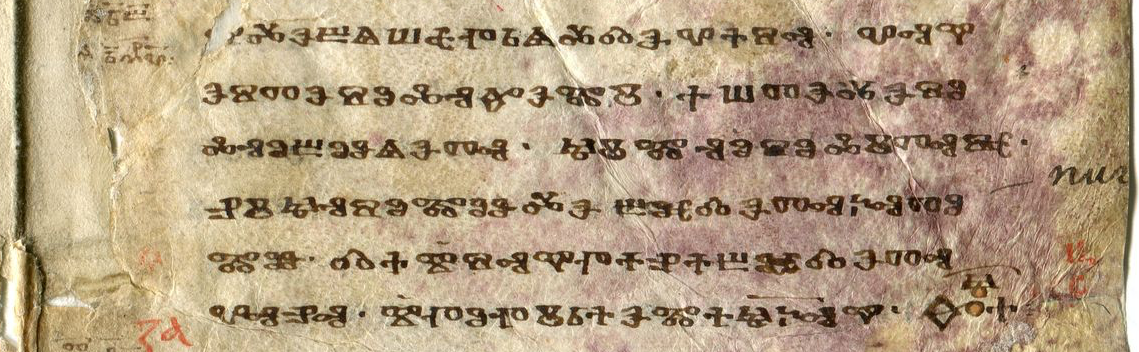
| Glag. | ⰲⱏⰹ | ⰵⱄⱅⰵ | ⱄⱁⰾⱐ | ⰸⰵⰿⰻ · |
|---|---|---|---|---|
| Cyr. | вꙑ | есте | соль | земи· |
| translit. | vy | jes‑te | sol‑ĭ | zem‑i: |
| morph. | you:nom | be-prs.2pl | salt-nom.sg | earth-dat.sg |
| lexeme | vy | byti | solĭ f | zemlʲa f |
| CS | vy̑ | jestè | sȏlĭ | zȅmji |
| PS | ˌu̯ə̄ | esˈte | ˌsali | ˌzemi̯āi̯ |
| PBS | u̯ōs | ˈeste | ˌsališ | ˌźemi̯ai̯ |
| PIE | u̯ōs | h₁és-te | sol-ís | dʰg̑ʰem-i̯-ah₂-ai̯ |
| Gk. | Ὑμεῖς ἐστε τὸ ἅλας τῆς γῆς· | |||
| Eng. | Ye are the salt of the earth: | |||
| Glag. | ⰰⱎⱅⰵ | ⰶⰵ | ⱄⱁⰾⱐ | ⱁⰱⱁⱆⱑⰵⱅⱏ · |
|---|---|---|---|---|
| Cyr. | аште | же | соль | обѹѣетъ, |
| translit. | ašte | že | sol‑ĭ | obujěje‑tŭ, |
| morph. | if | and, but | salt-nom.sg | become:tasteless-prs.3sg of |
| lexeme | solĭ f | o-bujati pfv | ||
| CS | ȃtje | že | sȏlĭ | o-bujajetĭ |
| PS | ˌāti̯a/e | ge | ˌsali | a-bāu̯i̯āi̯eti |
| PBS | ? | ge | ˌsališ | abi-bā̰u̯i̯ā̰i̯eti |
| PIE | ? | gʰ/gʷʰe | sol-ís | h₂m̥bʰi-bʰou̯h₂-i̯ah₂-i̯e-ti |
| Gk. | ἐὰν δὲ τὸ ἅλας μωρανθῇ | |||
| Eng. | but if the salt have lost its savor | |||
| Glag. | ⱍⰻⰿⱐ | ⱁⱄⱁⰾⰻⱅⱏ | ⱄⱔ · |
|---|---|---|---|
| Cyr. | чимь | осолитъ | сѧ; |
| translit. | č-imĭ | osoli‑tŭ=sę | |
| morph. | what-instr.sg | salt-prs.3sg=refl.acc | |
| lexeme | čĭto interrog. pron. | o-soliti sę pfv | |
| CS | čimĭ | o-solitĭ||ŭ | sę |
| PS | kīmi | a-salei̯eti | sēn |
| PBS | kḭ̄miš | abi-salei̯eti | sēm |
| PIE | kʷ-ih₁-bʰis | h₂m̥bʰi sol-ei̯e-ti | sē+m |
| Gk. | ἐν τίνι ἁλισθήσεται; | ||
| Eng. | wherewith shall it be salted? | ||
| Glag. | ⱀⰻⱍⱐⱄⱁⰿⱁⱆⰶⰵ | ⰱⱘⰴⰵⱅⱏ | ⰽⱏ | ⱅⱁⰿⱁⱆ · | |
|---|---|---|---|---|---|
| Cyr. | ничьсомѹже | бѫдетъ | къ | томѹ, | |
| translit. | ni‑č‑ĭsomu‑že | bǫde‑tŭ | kŭ | t‑omu, | |
| morph. | neg-what-dat.sg‑ptcl | be-pfv.prs.3sg | for, to (+ dat) | that-dat.sg.n | |
| lexeme | ničĭtože | byti | tŭ dem. pron. | ||
| CS | ni-česomu-že | bǫ̋detĭ||ŭ | kŭ(n) | tomù | |
| PS | nei̯-kesamāu̯-ge | ˈbūndeti | ku(n) | taˈmāi̯ | |
| PBS | nei̯-kesasmōi̯-ge | ˈbṵ̄ndeti | kam | tasmāi̯ | |
| PIE | nei̯ kʷ-eso-sm-oei̯ ge | bʰuh₂-n-d/dʰ-e-ti | kom | t-o-sm-oei̯ | |
| Gk. | εἰς οὐδὲν ἰσχύει | ||||
| Eng. | it is thenceforth good for nothing, | ||||
| Glag. | [ⱀⱏ] | ⰴⰰ | ⰺ҅ⱄⱏⰹⱂⰰⱀⰰ | ⰱⱘⰴⰵⱅⱏ | ⰲⱏⱀⱏ · |
|---|---|---|---|---|---|
| Cyr. | [нъ] | да | ісꙑпана | бѫдетъ | вънъ |
| translit. | [nŭ] | da | isypa‑na | bǫde‑tŭ | vŭnŭ |
| morph. | but | so that | cast:out-pst.pass.ptcp-nom.sg.f | be-pfv.prs.3sg | out |
| lexeme | isypati pfv | byti | |||
| CS | nŭ | da | jĭz-sy̋pana | bǫ̋detĭ||ŭ | vŭ̀/ĭ̀nŭ |
| PS | nu | dā | iz-ˈsūpānā | ˈbūndeti | uˈnu / u̯iˈnu |
| PBS | nu | dō̰ | iź-ˈsupā̰nā̰ (+ length) | ˈbṵ̄ndeti | ˈunam |
| PIE | nu(h) | dóh₃-d | h₁eg̑ sup-ah₂-n-ah₂ | bʰuh₂-n-d/dʰ-e-ti | (h)un(h)om |
| Gk. | ἔτι εἰ μὴ βληθὲν ἔξω | ||||
| Eng. | but to be cast out | ||||
| Glag. | ⰺ҅ | ⱂⱁⱂⰻⱃⰰⰵⰿⰰ | ⱍ҃ⰽⱏⰹ · |
|---|---|---|---|
| Cyr. | і | попираема | чловѣкꙑ. |
| translit. | i | popira-jem-a | člověk‑y |
| morph. | and | trample:on-prs.pass.ptcp-nom.sg.f | man-instr.pl |
| lexeme | popirati ipfv | člověkŭ m | |
| CS | ì | po-pira̋jema | čĭlově̋ky |
| PS | ˈei̯ | pa-pīˈrāi̯amā | ke/ilaˈu̯āi̯kū |
| PBS | ˈei̯ | pa-piˈrā̰i̯amnā̰ (+ length) | ke/ilau̯āi̯kōi̯š |
| PIE | h₁éi̯ | po pr̥-ah₂-i̯o-mh₂n-ah₂ | k/kʷe/ilo-u̯oi̯k-ōi̯s |
| Gk. | καταπατεῖσθαι ὑπὸ τῶν ἀνθρώπων. | ||
| Eng. | and trodden under foot of men. | ||
10.4.2. Text reading 3: comments
solĭ
- CS *sȏlĭ < PS *ˌsali < PBS *ˌsal-
- Latv. sā̀ls f i-stem ‘salt’ is from PBS *sāl-
- PIE *sal- (or *sh₂al-), also in Gk. ἅλς (gen ἁλός) m ‘salt’, f ‘sea’; Arm. ał i-stem ‘salt’; Lat. sāl (gen salis) m (n) ‘salt’, TochB salyiye ‘salt’ etc.
- with extension in *-d-: OCS sladŭkŭ adj. ‘sweet’; Lith. saldùs adj. ‘sweet’; Arm. ałt i-stem / u-stem ‘salt’; Goth. salt n ‘salt’
zemi
- from zemlʲa ‘earth’, with epenthetic l (∅ > l /[+lab]_jV)
- dat zemi without l may be an archaism, as the insertion of *j may not have taken place before *i; variant zemlʲi may have l from zemlʲa etc. (e.g. Vaillant 1950: 70)
- CS *zemlʲà < PS *zemˈi̯ā < PBS *źem-, also in Lith. žẽmė (a.p. 2), Latv. zeme, OPr. semme
- PIE *dʰg̑ʰem-, also in Ved. kṣám- f ‘earth’, Gk. χθών f ‘earth’, Hitt. tēkan m ‘earth’
obujějetŭ
- the verbal prefix o- is identical with the preposition o-, ob- ‘on’, probably from PIE *h₂m̥bʰi, although the initial vocalism is unexpected (*m̥ should yield OCS ę or, more rarely, ǫ; see 3.2.6)
- Glagolitic does not distinguish between *ě and *ja, which are traditionally transcribed ⟨ѣ⟩ – in a Cyrillic original the form would have been written ⟨обѹяетъ⟩
- from bujĭ adj. ‘mad, foolish’ – here it is a calque on Gk. μωρ-αίνω ‘am silly, foolish; become insipid’
- cf. YAv. cpv. baoiiō ‘longer’; Ved. cpv. bhū́yas- ‘more, bigger’
- from PIE *bʰou̯h₂-i̯o-, to *bʰu̯eh₂- ‘to become’
čimĭ
- the old instrumental singular form *či (preserved as a particle) < *kʷ-íh₁, plus the normal instrumental singular ending *-mĭ
ničĭsomuže
- formed on the basis of the genitive form, če/ĭso, plus dative singular ending ‑omu
- česo ‘of what?’ is the only Slavic form that preserves the old genitive singular ending *‑eso, also seen in Gk. (Hom.) τέο, Goth. ƕis
- elsewhere in non-personal pronouns Slavic has CS *-ogo < PS *-aga, which may or may not be etymologically related to PIE *-osi̯o
- dat.sg -omu goes back to PIE *-osmoei̯, cf. Ved. tásmai, with unclear loss of *s in Slavic
bǫdetŭ
- CS *bǫ̋detĭ||ŭ
- somehow from *bʰu̯eh₂-, but *n and *d/dʰ are unexplained
ničĭsomuže bǫdetŭ
- ‘it will not be (good) for anything’ (Vaillant 1964: 188)
- in sentences containing a pronoun (or pronominal adverb) formed with ni- and -že the negation ne is obligatory if the verb precedes the pronoun (adverb) (e.g. ne jęsomŭ ničesože ‘we did not take anything’), but facultative if the verb follows the pronoun (adverb), as in this sentence
kŭ
- possibly related to Ved. kám ptcl. (after datives)
kŭ tomu
- ‘in addition; (here) but’
nŭ (Vaillant’s addition; not in manuscript)
- cf. OCS nyně, nŭně adv. ‘now’
- PIE *nú(h), also in Lith. nù, nũ ‘now, today’; Ved. nú, nū́ ‘now’; Gk. νυ encl. emphatic ptcl.; Goth. nu ‘now’; Lat. nudiūstertius adv. ‘three days ago’; Hitt. nu ‘now’
da
- perhaps from PIE aor.inj.3sg *dóh₃-d, or aor.inj.2sg *dóh₃-s; this requires analogical reintroduction of *ā in Proto-Slavic, if one believes that pre-PS *-ās > PS *-ə̄ > OCS ‑y (as per Olander 2012) – from PIE *deh₃- ‘give’
- alternatively from PIE *do-h₁ and related to OEng. tō prep. ‘to’, OIr. do prep. ‘to’ (Derksen 2008: 94)
isypana
- from iz- and sypati ‘to pour, to strew’
- sypati is an iterative formation (6.8) to CS *sűti (sŭ̏pǫ sŭpètĭ) ‘pour, strew’ < PS *sāu̯p-tēi̯ (sup-); the acute tone of the infinitive indicates a laryngeal, but the root does not seem to contain one
- PIE *seu̯p-, also in Lith. sùpti supù ‘to rock’; Lat. īn-sipiō ‘throw in’
- Lith. sū́poti ‘to rock, cradle’ probably reflects an independently created lengthened grade
vŭnŭ
- originally accusative singular of a noun *vŭ̀nŭ, cf. CS vŭně̀ ‘outside’, which looks like the locative singular of that noun
- perhaps related to Ved. ván- ‘tree’, YAv. vanā- f ‘tree’
popirajema
- iterative (6.8) from po-pĭrati (1sg po-pеrǫ) ‘trample, suppress’
- Rix et al. (2001): 585–586 with n. 9: PIE *spʰerh- ‘kick’ has split in two in Slavic: OCS prěti (1sg pĭrǫ) ‘push’ and pĭrati (1sg perǫ) ‘step; tread’; related to Lith. spìrti spiriù ‘kick’, Ved. sphuráti, Lat. spernō ‘despise’ etc.
- Derksen (2008), 427–428: identical with pĭrati perǫ ‘wash’ from PIE *per-, also in Ved. pŕ̥t‑ (f ‘battle; fight’ (considered to be of unclear etymology by Mayrhofer 1992–2001: 2: 160); however, in Rix et al. (2001): 473, PIE *per‑ is considered to be a separate root also attested in Armenian (aor. ehar ‘beat’) and Baltic (per̃ti periù ‘to beat’)
- the present passive participle CS *-om-, *-jem- from PS *-am- probably reflects PBS *‑mn‑, also in Lith. prs. pass. ptcp. -ama- (e.g. nẽšamas), OPr. poklausīmanas ‘being heard’, which reflects the PIE *-mh₁no- participle (Nowak 2017)
člověky
- Bulg. čovék, Ru. čelovék, Po. człowiek
- CS *čĭlově̋kŭ is perhaps from older *čelově̋kŭ; there seems to be a tendency for unaccented *e to become *ĭ in palatal environments (Kortlandt 2011b), although the precise conditioning is unclear
- often regarded as a compound containing *čel- (related to CS *čelʲadĭ ‘servants’) and *věk- (related to Lith. vaĩkas ‘child’)
10.5. OCS text reading 4: Matthew 5.14
10.5.1. Text reading 4: text

| Glag. | Ⰲⱏⰻ | ⰵⱄⱅⰵ | ⱄⰲⱑⱅⱏ | ⰿⰻⱃⱆ · |
|---|---|---|---|---|
| Cyr. | Вꙑ | есте | свѣтъ | мирѹ· |
| translit. | vy | jes‑te | svět‑ŭ | mir‑u: |
| morph. | you:nom | be-prs.2pl | light-nom.sg | world-dat.sg |
| lexeme | vy | byti | světŭ m | mirŭ m |
| CS | vy̑ | jestè | svě̑tŭ||e | mȋru |
| PS | ˌu̯ə̄ | esˈte | ˌsu̯ai̯tə | ˌmēi̯rāu̯ |
| PBS | u̯ōs | ˈeste | ˌśu̯ai̯tas | ˌmḛi̯rōi̯ |
| PIE | u̯ōs | h₁és‑te | k̑u̯oi̯t‑ós | mei̯h‑r‑óei̯ |
| Gk. | Ὑμεῖς ἐστε τὸ φῶς τοῦ κόσμου. | |||
| Eng. | Ye are the light of the world. | |||
| Glag. | ⱀⰵ | ⰿⱁⰶⰵⱅⱏ | ⰳⱃⰰⰴⱏ | ⱆⰽⱃⱏⰻⱅⰻ | ⱄⱔ |
|---|---|---|---|---|---|
| Cyr. | не | можетъ | градъ | ѹкрꙑти | сѧ |
| translit. | ne=može‑tŭ | grad‑ŭ | ukry-ti=sę | ||
| morph. | neg=can-prs.3sg | city-nom.sg | hide-inf | ||
| lexeme | mošti ipfv | gradŭ m | ukryti sę pfv | ||
| CS | ne | mòžetĭ||ŭ | gȏrdŭ||e | ukry̋ti | sę |
| PS | ne | maˈgeti | ˌgardə | au̯-ˈkrūtēi̯ | sēn |
| PBS | ne | maˈgeti | ˌgardas | au̯-ˈkrṵ̄‑tēi̯ | sēm |
| PIE | ne | magʰ-e-ti | gʰordʰ-ós | h₂au̯ kruh‑tēi̯ | sē+m |
| Gk. | οὐ δύναται πόλις κρυβῆναι | ||||
| Eng. | A city cannot be hid | ||||
| Glag. | ⰲⱃⱈⱆ | ⰳⱁⱃⱏⰻ | ⱄⱅⱁⱗ · | |
|---|---|---|---|---|
| Cyr. | вр[ъ]хѹ | горꙑ | стоѩ· | |
| translit. | vr[ŭ]xu | gor‑y | stoj‑ę | |
| morph. | on (+ gen) | mountain-gen.sg | stand-prs.act.ptcp.nom.sg.m | |
| lexeme | vrĭxu | gora | stojati ipfv | |
| CS | vĭrxù | gorỳ||ě̀ | stoję̀||ě̀ | |
| PS | u̯irˈxāu̯ | gaˈrə̄ | stai̯ən | |
| PBS | ˈu̯iršāu̯ | gaˈrōs | stai̯an(t)s | |
| PIE | u̯ŕ̰s‑ēu̯ | gʷor-áh₂s | sth₂-i̯‑onts | |
| Gk. | ἐπάνω ὄρους κειμένη· | |||
| Eng. | that is set on an hill. | |||
10.5.2. Text reading 4: comments
světŭ
- related to the Lithuanian verb šviẽsti ‘shine’, from PBS *ˌśu̯ai̯t‑
- a similar formation to OCS světŭ is seen in Ved. śvetá- adj. ‘white; bright’
miru
- OCS mirŭ ‘world’ and mirŭ ‘peace’ are probably originally the same word
- a Baltic cognate is found in OLith. mieras ‘peace’, Latv. miêrs ‘peace’; the accentuation of the Latvian word reflects a Proto-Balto-Slavic acute syllable (9.6.2), i.e. PBS *mḛi̯rá‑, indicating the former presence of a laryngeal
- PIE *meih‑ro‑ may belong to a PIE root *mei̯h‑ also seen in PS *ˈmēi̯lə (CS *mi̋lŭ) adj. ‘sweet; dear’, Lith. míelas ap. 3 ‘nice; sweet’, Latv. mĩļš ‘nice; sweet’, OPr. mijls ‘sweet; dear’; and in Lat. mītis adj. ‘soft; gentle’
- the different tones of CS *mȋrŭ (BCMS mȋr) and CS *mi̋lŭ (BCMS mȉo) do not constitute a problem (pace Havlová, Erhart & Janyšková 1989–2018: 8: 478), but simply reflect the operation of Meillet’s Law (3.3.2) in *mȋrŭ
- the o-stem dative singular ending OCS ‑u goes back to PS *‑āu̯ (CS *‑u), probably from PBS *ōi̯ < PIE *‑oei̯ (cf. Gk. ἀγρ‑ῷ ‘field-dat.sg’)
ne
- the negation OCS ne < PS *ne (CS *ne) is inherited from PBS *ne (cf. Lith. nè, Latv. ne) from PIE *ne (cf. Lat. ne‑sciō ‘I do not know’, ne-quis ‘not one’, Goth. ni, Ved. ná, YAv. na‑uua ‘or not’)
možetŭ
- PS *mag‑ ‘be able’ is related to Lith. magė́ti ‘please’ (3ps mãga) and OPr. massi ‘be able’ [if not a borrowing from Slavic; see Derksen (2008): 321]
- the Baltic and Slavic forms go back to PBS *mag‑ from PIE *magʰ‑, also seen in Ved. maghá‑ m ‘power’, Goth. 3sg mag ‘is able’ and Gk. μάχομαι ‘fight’, μηχάνη ‘instrument’
- some authors disconnect the Greek forms and reconstruct o-grade for Balto-Slavic and Germanic, explained from a former perfect form (Derksen 2008: 321)
gradŭ
- PS *ˌgardə (CS *gȏrdŭ||e) (a.p. c) ‘fortification; town’ is from PBS *ˌgarda‑ also seen in Lith. gar̃das (a.p. 4) ‘enclosure’, from PIE *gʰordʰo‑
- PIE *gʰordʰo‑ is found in Ved. gr̥há- m ‘house’, Go. gards m. ‘house’
ukryti
- the preverb u‑ is identical to the preposition u ‘by; at’
- it can be traced back to PBS *au̯, also in Lith. au- ‘away’, Latv. au- ‘away’
- from PIE *h₂au̯, also in Ved. áva adv ‘down; off’, Lat. au‑ pref ‘away’
- OCS kryti is related to OEng. pst hrēad ‘cover’, ptcp hroden, ONor. ptcp hroðenn, from PIE *kréu̯h-dʰe-
vr[ŭ]xu
- written vrxu, but should be corrected to vrŭxŭ or vrĭxŭ (see 2.2)
- originally the locative singular form of PS *u̯irˈxu (CS *vĭ́rxŭ) m u-stem (a.p. b) ‘top’
- identical with Lith. viršùs m (a.p. 4) ‘top’, Latv. vìrsus m ‘upper part; top’
- the x of Slavic and š of Lithuanian reflects PBS *š from PIE *s through the ruki change (3.2.3), triggered by the *r
- the root *u̯ers‑ is also seen in Ved. várṣman‑ m ‘top’, OIr. ferr ‘better’, Goth. wairs ‘worse’
gory
- related to Lith. girià f (a.p. 2) ‘woods’ and Latv. dziŗa ‘woods’, both with zero-grade of the root
- from PIE *gʷr̥, also in Ved. girí- m ‘mountain’
stoję
- while the exact formation of stojati is uclear, it is obvious that the verb is derived from PIE *steh₂‑ ‘stand’, also in OCS stati ‘stand’