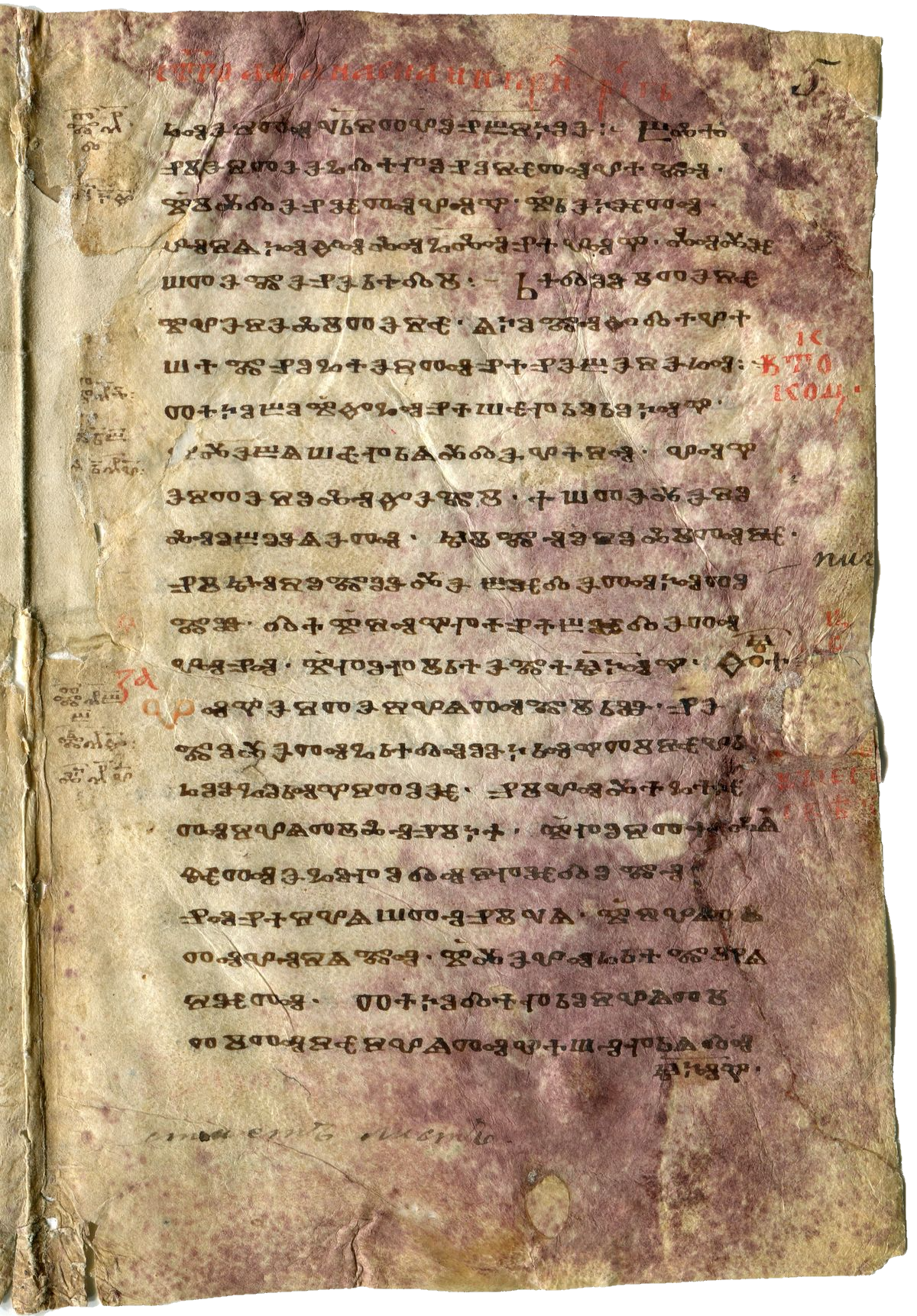
Intro to OCS
Front matter
Preamble
Aim of the course
Overview
1. Slavic and Old Church Slavonic
1.1.
The Slavic languages
1.1.1. Distribution of the Slavic languages
1.1.2.
Traditional subgrouping
1.1.3. The position of the Old Novgorod dialect
1.2. Proto-Slavic and Common Slavic
1.3. Slavic and the other Indo-European branches
1.3.1.
Slavic and Baltic
1.3.2. The position of Balto-Slavic in the Indo-European family
1.4.
Old Church Slavonic
1.4.1.
The OCS corpus
1.4.2. The creation of the Glagolitic and Cyrillic alphabets
1.4.3. Local variants of the Cyrillic alphabet
1.5.
Handbooks
1.5.1. Synchronic dictionaries of OCS
1.5.2. Etymological dictionaries of Slavic languages
1.5.3. Synchronic grammars of OCS
1.5.4. Historical grammars of Slavic languages
2. The OCS phonological system
2.1.
Segments: overview
2.2.
Syllabic liquids
2.3.
Syllable structure
3. Slavic historical phonology
3.1. Sound changes from PIE to OCS: overviews
3.2. Sound changes from PIE to Proto-Balto-Slavic
3.2.1.
Satəm assibilation
3.2.2. Delabialisation of labiovelars
3.2.3.
Ruki change
3.2.4.
Loss of laryngeals
3.2.5.
Hirt’s Law
3.2.6. Diphthongisation of syllabic sonorants
3.2.7.
Accentual mobility
3.2.8.
Winter’s Law
3.2.9. Deaspiration of voiced aspirated stops
3.2.10. Delabialisation of *o to *a
3.2.11. Dissimilation of dental stops to *s plus stop
3.2.12. Loss of word-final stops
3.2.13. Regressive voicing assimilation of obstruents
3.2.14.
PIE *ē̆u̯ in Balto-Slavic
3.3. Sound changes from Proto-Balto-Slavic to Proto-Slavic
3.3.1.
Dybo’s Law
3.3.2.
Meillet’s Law
3.3.3. Delabialisation of *ō to *ā
3.3.4. Loss of word-final fricatives
3.3.5. Loss of word-final nasals
3.3.6. Loss of syllable-final stops
3.4. Common Slavic phonological developments
3.4.1.
First Palatalisation
3.4.2. Fronting of vowels after palatal consonants
3.4.3. Monophthongisation of oral diphthongs
3.4.4.
Second Palatalisation
3.4.5.
Liquid Metathesis
3.4.6. Common Slavic vowel contractions
3.4.7. Loss of postconsonantal *i̯
3.4.8. Backing of *ē to *ā after palatalised consonants
3.4.9. Monophthongisation of nasal diphthongs
3.4.10. Reinterpretation of vowel quantity as quality
3.4.11.
Stang’s Law (Slavic)
3.4.12. The loss of the reduced vowels (jers)
4. Morphology: the OCS nominal system
4.1.
Nouns
4.1.1. Nominal inflectional categories
4.1.2. Masculine o- and jo-stems
4.1.3.
Masculine u-stems
4.1.4. Neuter o- and jo-stems
4.1.5. Feminine (masculine) a- and ja-stems
4.1.6. Feminine (masculine) ĭ-stems
4.2.
Adjectives
4.3.
Pronouns: gendered
4.4. Pronouns: personal and reflexive
5. Slavic historical morphology: nominal system
5.1.
General
5.2.
Consonant stems
5.3.
i-stems
5.4.
u-stems
5.5.
ah₂-stems
5.6.
o-stems
5.7.
Personal pronouns
5.8.
Adjectives
5.8.1.
Stem-formation
5.8.2. Short and long forms of the adjectives
6. Morphology: the OCS verbal system
6.1.
Overview
6.2.
Present classes
6.3.
Present: inflection
6.4.
Imperative: inflection
6.5.
Aorist: inflection
6.6.
Imperfect: inflection
6.7. Aspect: imperfective vs. perfective
6.8.
Iteratives
7. Slavic historical morphology: verbal system
7.1.
PIE verbal dimensions
7.2.
The new imperfect
7.3. The development of the verbal personal endings
7.4.
Infinite forms
8. Other parts of speech; word formation; syntax
8.1.
Indeclinable words
8.1.1.
Adverbs
8.1.2.
Prepositions
8.2.
Notes on word formation
8.3.
Notes on syntax
8.3.1.
Use of cases
8.3.2.
Word order
8.3.3.
Subordination
9. Appendix: Balto-Slavic prosody
9.1.
Introduction
9.2.
Terminology and notation
9.2.1.
Terminology: accent
9.2.2.
Terminology: tones
9.2.3. Notation of Proto-Balto-Slavic, Proto-Slavic and Common Slavic prosodic features
9.3. Proto-Balto-Slavic prosody
9.3.1. Proto-Balto-Slavic: prosodic system
9.3.2. Proto-Balto-Slavic: paradigmatic accent
9.4. Proto-Slavic and Common Slavic prosody
9.4.1. Proto-Slavic and Common Slavic: prosodic system
9.4.2. Proto-Slavic and Common Slavic: paradigmatic accent
9.5. Prosodic systems of the Slavic languages
9.5.1. South Slavic: Bosnian, Croatian, Montenegrin, Serbian
9.5.2.
South Slavic: Slovene
9.5.3. South Slavic: Bulgarian and Macedonian
9.5.4.
East Slavic
9.5.5.
West Slavic
9.6. Prosodic systems of the Baltic languages
9.6.1.
Lithuanian
9.6.2.
Latvian
10.
Text reading
10.1. Introduction to text reading
10.2. OCS text reading 1: Matthew 5.11
10.2.1.
Text reading 1: text
10.2.2. Text reading 1: commentary
10.3. OCS text reading 2: Matthew 5.12
10.3.1.
Text reading 2: text
10.3.2. Text reading 2: commentary
10.4. OCS text reading 3: Matthew 5.13
10.4.1.
Text reading 3: text
10.4.2. Text reading 3: comments
10.5. OCS text reading 4: Matthew 5.14
10.5.1.
Text reading 4: text
10.5.2. Text reading 4: comments
Abbreviations
References